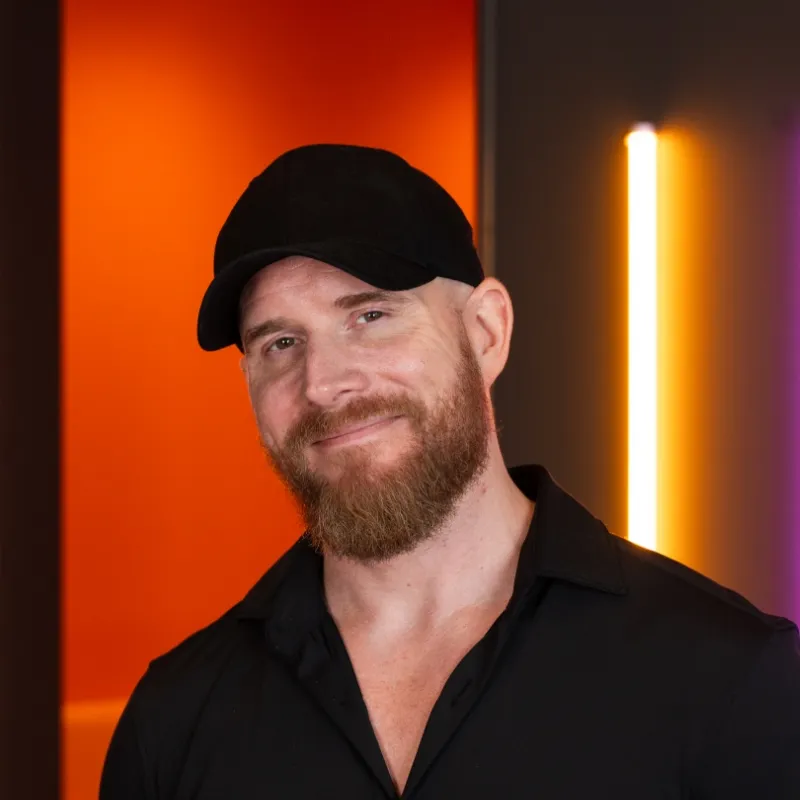
Micke Alm

About Me

I'm Micke Alm – a design leader, dad, and the kind of person who tends to bring a bit of structure into chaos, whether that's in a design system, a design organisation or daily life.

[Micke's own words about home and family.] Outside of work, I recharge through music (I play guitar and still chase the perfect tone), photography, and the gym.

I first got into the industry as a web designer and front-end developer, back when CSS was still a bit of a dark art. I loved the craft of it – the precision, the structure, the almost meditative satisfaction of making things look and feel just right. That attention to detail, and the joy of creating with code, gave me a strong foundation for what was to come.

Everything changed when I joined Episerver. That's where I really stepped into product design – and where I began to understand the why behind the work. Under the guidance of my manager, Chris McCann, I learned how process could support creativity, not stifle it. I saw firsthand how research, structure, and UX thinking could elevate a product and create clarity for teams. Chris showed me how good design is about more than visuals – it's about understanding people, solving problems, and working collaboratively. That mindset has stayed with me ever since.

Today I lead product design at GetAccept and run Design Ops for R&D. When our engineers started building with AI at a pace no manual design process could match, I took my team out of Figma and back into the material I started with: code. I built ga-designer, an agentic design tool that works with our real design system and our real product, and that designers, engineers and product managers all use. In a way it's come full circle. The joy of creating with code that got me into this industry is now how my whole team designs – with the judgement and taste of designers still making every call.

Process

Discovery and research

I don't follow any framework dogmatically, but I have found that the Double Diamond works best as a set of decisions rather than a set of phases. What matters is that we stop and agree at the right moments: on the plan, on the problem, on the direction, and on what we release.

However, the cornerstone of any successful design project is a clear and correct understanding of the problem we're attempting to solve. In organisations where user understanding is yet to be fully developed, I prioritise this aspect. This approach allows me to establish personas, identify biases – both mine and the organisation's – and gain a deeper understanding that fuels our product strategy.

For most organisations, when it comes to new feature ideas that broaden the product, I believe we should treat ideas as we would a new startup. We should do the proper Discovery work and ensure we have product market fit and a clear ROI, or path to it, before investing in them blindly.

Design and delivery

I design in the real material. Instead of drawing a picture of the product and handing it over, my team and I explore directions directly in code, using our real design system and real data. That lets us compare real options side by side, test them early and share them with anyone in minutes.

AI does a lot of the legwork, but it is not one-shot magic. Every direction still needs a designer's oversight, judgement and taste before it moves on. My job is to make sure the tools make good design faster, not make fast design look good.

After a product or feature is delivered, I firmly believe in closing the loop by involving everyone in the feedback process. Beyond mere delivery of features, developers too need to understand user responses to maintain their motivation and foster a user-centric mindset. To this end, I make it a point to report back to the team, sharing both feedback and achievements, instilling a sense of pride in our collective work.

Today that loop is faster than ever. A user or designer can walk through a solution on video, thinking aloud, and within minutes their feedback is broken down into issues the team can act on.

I love

Management and design leadership

One of my primary interests is making design an organisational capability, not a department. That used to mean helping everybody understand the value of research and user centricity. Today it also means building design expertise into the tools everyone uses, so that good design doesn't depend on a designer being in the room.

Meeting and engaging with users

My main drive is helping others. Interacting with users in an interview or through support, helps me top up my empathy tank and really get hands-on in understanding and helping people with their problems. Excellent source of dopamine when you get the feedback that you have actually helped!

Ideas and creativity

I am something of an 'ideas guy', and generally run on a pretty full tank of creativity. Envisioning something new and quickly making a prototype for it gives me a true feeling of 'creating something' and often spawns several new ideas of its own. These days, when a tool I need doesn't exist, I build it. My imagination is the limit, not a vendor's roadmap.

Design and design systems

Even knowing all the work that went into making the correct decisions along the way, nothing gives me butterflies more than someone saying I created a beautiful and easy to understand design. On the other end of the spectrum, I love the rigidity and structure of design systems – especially now that the design system in code is the single source of truth that designers, engineers and AI agents all build from.